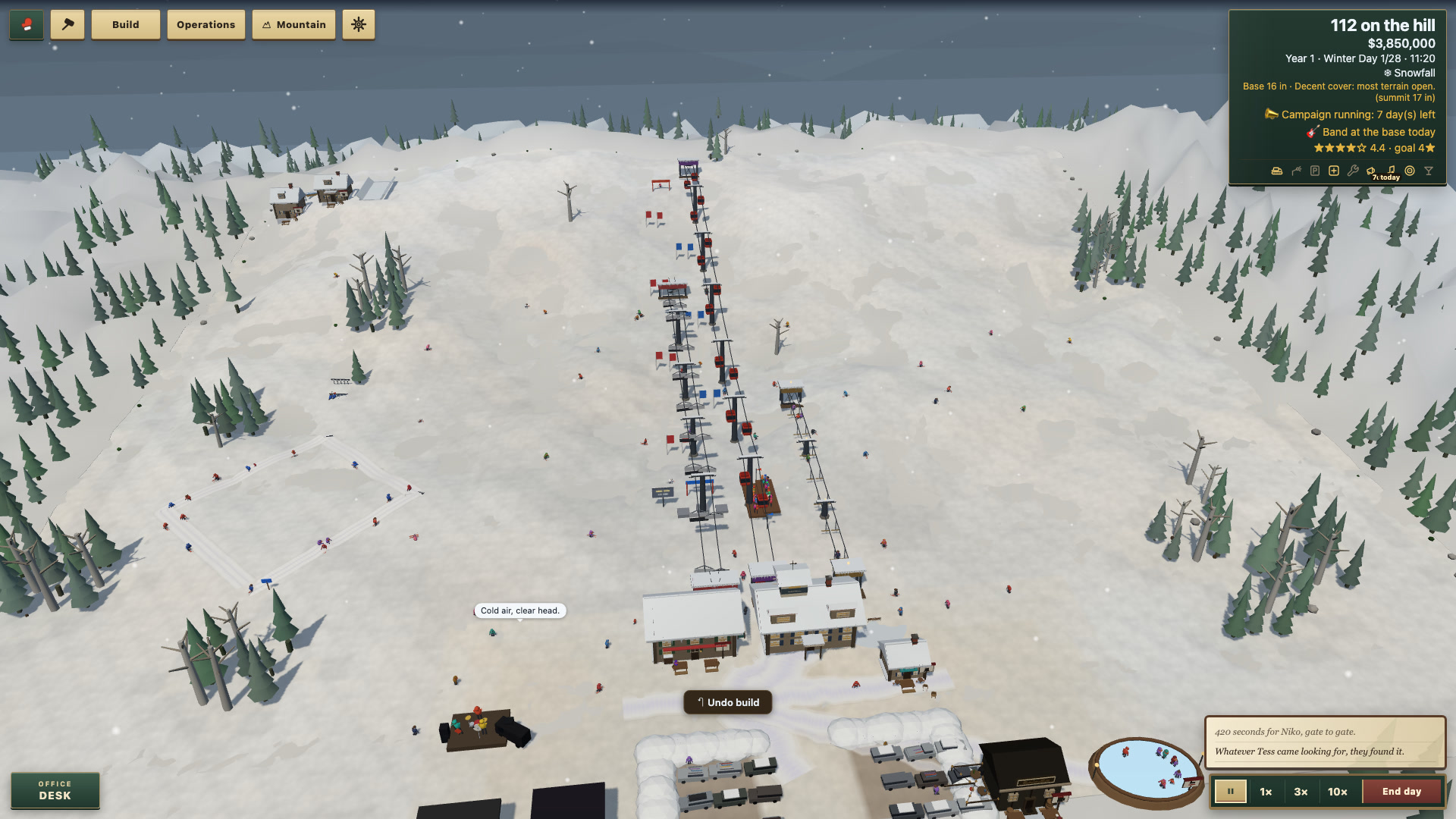
Weather changes demand and the physical surface you can offer. Read temperature, natural snowfall, current coverage, and the forecast together. A busy forecast is useful only if the mountain will be ready when guests arrive.
Page 16
Operate the snow you have
Storms can lift demand and operating pressure at the same time.
Weather changes demand and the physical surface you can offer. Read temperature, natural snowfall, current coverage, and the forecast together. A busy forecast is useful only if the mountain will be ready when guests arrive.
Climate pressure makes timing more important. Preserve cash and machine hours for windows when snowmaking can create durable operating value.
Page 17
Coverage is a capital decision every night
Snowmaking trades cash and operating effort for coverage and reliability. Aggressive output can secure a critical route, but unnecessary output spends money where natural snow, low demand, or unused terrain cannot repay it.
Protect the complete route first. Deep snow on an isolated segment does not open the mountain.
Prioritize essential connecting terrain
Watch the forecast before committing
Match intensity to the operating goal
Include energy and staffing in the decision
Page 18
Turn coverage into a product
Coverage makes terrain possible. Grooming helps make it dependable and welcoming. Use the crew where surface quality affects the largest share of the guest journey, especially core returns and high-traffic routes.
The best grooming plan is not necessarily the widest. It is the plan that protects the experience your current operation promises.
Page 19
Plan for volatility, not a perfect winter
Good seasons can hide a fragile cost structure. Weak windows reveal it. Keep enough liquidity to maintain a viable route through warm periods, repairs, and disappointing turnout.
Long-term resilience comes from matching fixed costs to realistic demand, building reliable core terrain, and adding optional capacity only when the business can carry it.